Tuesday, June 23, 2009

Tome: Invisible Prey

Invisible Prey (Lucas Davenport, #17) Invisible Prey by John Sandford


My review


rating: 2 of 5 stars
Ho-Hum 17th Prey novel that see Minneapolis cop Lucas Davenport investigate a series of burglaries from wealthy homes. By the numbers and a let-down after the previous blistering entry into the series, Broken Prey. Strictly for fans.


View all my reviews.

Tome:The Gargoyle

The Gargoyle The Gargoyle by Andrew Davidson


My review


rating: 4 of 5 stars
Lusciously written and gorgeously romantic, Andrew Davidson's debut novel is part treatise on the recuperation of a burn victim, part medieval epic and part Arabian Night's style short story vignette but it's all about the redemptive power of love. Not to be approached with even a dollop of cynicism, The Gargoyle is a must read for die hard romantics.


View all my reviews.

Tome:The Power Of The Dog

The Power of the Dog The Power of the Dog by Don Winslow


My review


rating: 5 of 5 stars
Epic crime saga spanning 30 years that recounts the quest of driven DEA Agent Art Keller to bring down the powerful Mexican Drug Cartel headed by Aden Bererra. Thunderously violent with copious lashings of graphic sex, Don Winslow's blood-drenched novel is James Ellroy-esque in it's examination of America's sordid psyche but stops just short of the latter's all-out nihilism. An absolute scorcher of a read.


View all my reviews.

Sunday, June 14, 2009

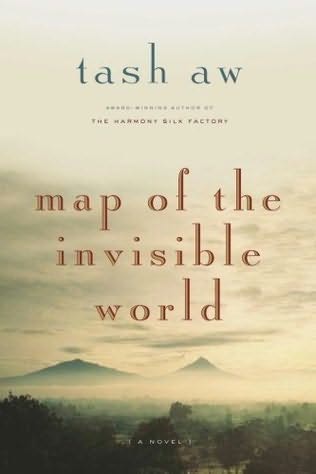
Tome: Map Of The Invisible World


Sometimes, it's nice to have your expectations dashed. I started Tash Aw's second book after the Costa Award winning "Harmony Silk Factory" with the same trepidation I approach most tomes that come with the stamp of "literary work by an award winning author". The niggling anxiety that instead of a coherent plot I"m going to be bombarded instead with wordy digressions into philosophical ruminations, that instead of pace you get garrulous asides on 5 different ways to describe "sunlight slicing through tree leaves" or numerous variants on circumlocutory prose that fill up pages but don't advance the story one iota.
The anxiety in this case was heightened because Aw's debut novel, frankly speaking, bored me shitless.
Map Of The Invisible World though, surprised me with a pacy narrative, structured storyline and shockingly engaging plot that to put it bluntly, has me worried that it may not earn the plaudits reserved for books you DON'T take on an 8 hour flight.
After all it resolutely avoids an overtly depressing tone, has the audacity to bring it's myriad plot threads to a fitting conclusion, the gall to wrap up (most) of it's loose ends, and in an act of almost suicidal bravery, dares to end on a happy note. If this isn't Aw's symbolic "Fuck You" to the Booker, Orange, Whitbread or Costa Committee, I don't know what is.
Set amidst a turbulent Indonesia of the '60s, fueled by President Sukarno's purges of Western influences, communist unrest and the country's infamous Confrontation with neighbouring Malaysia, Map tells the tale of orphan Adam, who leaves his small island of Nusa Perdo for Jakarta when his Dutch step-father, painter Karl de Willigen, is taken away by the Army for possible forced repatriation back to Holland. Guided only by a photo taken of his step-father and an American lady, Adam goes in search of her to help locate Karl.
The lady in question, Margaret Bates, Indonesian born with an uncanny knack of blending in and understanding the local mindset, has a past with Karl, and takes an immediate liking and attachment to Adam. So, unfortunately does ultra-radical Din, Margaret's teaching assistant who sees in Adam's naivete and innocence, the perfect tool to execute a dangerous plot to topple the Government.....
And all the while, in Kuala Lumpur, Johan, an Indonesian boy adopted into a wealthy and connected Malaysian family, wrestles with guilt at what he perceives to be an abandonment of his younger sibling many years ago in an orphanage.....
Aw's resort to that hoariest of cliches by now, the Chronological Juggling of sub-plots, thankfully doesn't detract from the pleasure of reading this breezily executed tale of love, loss and guilt.
And Aw's occassional concession to the "I read for the writing" crowd via descriptions of a windowpane shattering over a boy's head as " it had exploded into a million tiny shards that refracted the sunlight-balls of brilliant colour that exploded into existence for a second, like those magical bursts of fireworks that light up for a moment before suddenly disappearing, leaving you staring at nothingness" and the closing of shutters as "light framing the window in thin strips" are brief enough to not trigger my usual gag reflex at such prose-wanking shit.
Map's biggest casualty are it's characters who function as mere plot-drivers and rarely break out of their pre-fab specs: The feisty White Woman, the gutsy and beautiful Indonesian Lass, the shifty CIA spook, the good if weak Gay Journalist, the spineless orphan and evil radical. Even Sukarno, who briefly cameos, comes across as a decadent Autocrat who despises all things Western while seemingly unable to live without it's trappings, which however, I concede, could very well be a spot-on observation of this fascinating Despot.
If anything, Map's most interesting character, guilt-wracked Johan has the misfortune to occupy the book's most superfluous and throw away chapters. The entire KL bound narrative could have been safely excised without interrupting the story and could have actually resulted in an even more taut and disciplined narrative.
But these minor gripes aside, Map is an engaging read you could breeze through in a hazy weekend better spent indoors.
Hell, I'd take it on an 8 hour flight.

Monday, January 12, 2009

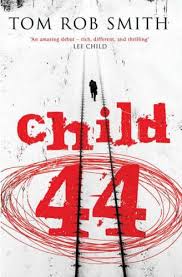
Tome: Child 44


The serial killer tale is, by now, a weary veteran of the thriller genre. Its ubiquitous presence in the Crime section of any bookstore is testimony to the fact that writers , aspiring or established, feel compelled to leave their mark in this sub-genre. For good reason, because, told even moderately well, tales of diabolically vicious sociopaths, marching to the beat of their own twisted psyches and leaving behind a trail of dead bodies makes for page-turning stuff.
The downside to the proliferation of such tales is that, read enough of them, and you can practically etch your own template for its plot machinations: First or third person investigative narrative interspersed with the killer’s point of view, whose identity and motives are obfuscated through a generous smattering of red herrings as the body count steadily stacks up via ritualistic slayings, before a gory, twist-laden denouement unravels the mystery, unmasks the killer and ties up loose ends with a bloody bow.
Tom Rob Smith’s debut, Child 44, while clutching at some of the tropes of the serial thriller, nevertheless manages to cut loose of some of the genre’s restrictive trappings, by anchoring its events at a particular point and time in history, shrouding it in the claustrophobic confines of Stalinist Russia circa 1953.
Starting in 1933, in the famine-stricken Ukraine village of Chervoy “where grown men chewed clods of earth in the hope of finding ants or insect eggs, where children picked through horseshit in the hope of finding undigested husks of grain and women fought over the ownership of bones”, then racing forward twenty years to 1953, when Stalin’s iron grip on Soviet life is at it’s tightest, Child 44 is a gripping thriller of the first order.
The discovery of a young boy’s body on train tracks in Moscow , brings Leo Stepanovich Demidov , investigating officer of MGB, the State Security force, to the house of the boy’s family, who are convinced he was murdered. Far from investigating their suspicions, Leo is there to convince them that their son’s death was accidental.
For to claim otherwise is to acknowledge a rend in society’s perfect fabric, an upset to the natural, precise order of things, for such crimes simply do not take place in Stalin’s Soviet.
Stalin’s aphorism, “Trust But Check”, interpreted as “Check On Those We Trust” rebounds cruelly on Leo when he is asked to denounce his wife Raisa as a Capitalist sympathiser. Refusing, he and Raisa are exiled to a town deep in the Ural mountains. There Leo discovers a similar pattern of child killings like the one he helped cover up in Moscow.
Leo and Raisa’s race to find the killer is white-knuckle reading, because it isn’t merely the lack of resources or access to investigative tools that hamper them, but an entire state that refuses to believe the killings are connected.
Leo’s clandestine investigation of the killings, painstakingly piecing together evidence, clues and timelines runs parallel to the relentless grind of the State machinery to threaten, coerce, beat and torture confessions out of drunks, vagrants, homosexuals and the mentally handicapped. Murder is an aberration, therefore, it’s perpetrator would also be one, goes the official reasoning.
For in Stalin’s State Security Force, the investigator’s creed was “to scratch away at innocence until guilt was uncovered. If no guilt was uncovered, they hadn’t scratched deep enough.” Leo, growing increasingly despondent realizes “the killer would continue to kill, concealed not by any masterful brilliance but by his country’s refusal to admit that such a man even existed, wrapping him in perfect immunity.”
Perhaps it’s Smith’s masterful depiction of Soviet life under a tyrannical State, not to mention a fascinating portrait of Leo and Raisa’s often ambiguous relationship, that eventually eclipses the actual serial killer plot, which in the last 100 pages, accelerates into the requisite thrills, spills, hunts, chases and climactic confrontation that this genre demands.
Cloaked in a miasma of oppressive brutality, Child 44 is an absolute scorcher of a thriller, packing a stunning whallop that makes it shine at the quality end of a crowded field.
And that’s saying something.

A slightly edited version is on StarOnLine:

http://thestar.com.my/lifestyle/story.asp?file=/2009/1/9/lifebookshelf/2524048&sec=lifebookshelf

Friday, January 02, 2009

Flicks: Children Of Men (***)/Babylon AD(*)


Set designers for a post apocalyptic movie most probably by now have a ready made template to work off:
Burnt out buildings, rusting hulks of abandoned vehicles, heavily armed troops patrolling desolate slums peopled by grimy survivors scavenging for food...you get the picture, especially if you've seen enough of these World Gone To Shit flicks (Escape From New York & LA,28 Days & Weeks Later, Death Race, 12 Monkeys etc). Within these settings, the plot of a Lone Warrior escorting a Chosen Hope of Redemption to a designated Sanctuary has been endlessly regurgitated in countless films, a few actually seeing the light of a cinema hall, the majority languishing in Direct-To-DVD dungeons.
Lifting such a setting above the generic slush pile requires writing of exceptional polish and direction from a deft hand sifting through well trod tropes to extract an additional layer of untapped originality buttressed with unexplored subtext.
Alfonso Cuaron's dark, disturbing and frankly bloody marvellous Children Of Men is what happens when a talented and gifted film maker elevates a script's dog-eared origins to fascinating highs and Matthieu Kassovitz' God Awful Babylon AD is what happens when a no talent hack (see also the equally shitty Kassovitz- helmed Gothika for further vindication on this point) torpedoes what could have been a passable Vin Diesel actioner, sinking it to the depths of unwatchability , earning Diesel his second sci-fi stinker after The Ridicules Of Chronic.

Children Of Men, based on a PD James novel, is set in 2027, in a world ravaged by infertility where not a single humn birth has been recorded for more than 18 years. London, it's totalitarian regime rounding up all immigrants for either deportation or extermination is chillingly filtered through Cuaron's unflinching lenses as Theo Faron (Clive Owen, effortlessly shedding his cool machismo from Shoot 'Em Up and Sin City) is talked by his estranged partner Julian and leader of Underground Rebel Movement The Fishes ( an effective but brief Julianne Moore) into ferrying a young girl Kee (Clare-Hop Ashitey) and her nanny Miriam (Pam Ferris) to an alleged safe haven called the Human Project.
Kee, you see, is pregnant and her child will mark the first recorded human birth in over a decade. When Theo discovers that Kee and her unborn baby will be used as pawns The Fishes' ongoing battle with the anti-immigrant Government, he, Miriam and Kee go on the run, trying to evade Government troops and Julian's coldly efficient second in command Luke (Chiwetel Ejiofor).
Like V For Vendetta, Children Of Men is uncompromisingly bleak in it's depiction of a Fascist England and it's treatment of immigrants, gritty in its lensing of detention camps and sprawling refugee slums and thrilling in it's choreography of explosive, hard-hitting violence.
Special mention: A wonderful Michael Caine as aging ex-hippie Jasper.
An absolute must watch.

Babylon AD takes a near identical premise to Children Of Men, in this case brawny, gravel-voiced mercenary Toorop (Vin Diesel) is hired to transport child prodigy Aurora and her carer Rebecca (Michelle Yeoh) from their icy convent retreat on the Russian steppes to the United States where great things apparently await her. No such luck for the viewer as Kassovitz sets out to systematically botch the telling of this tale and fuck up it's meagre action scenes with jerkily filmed and badly edited shots. Apparently 2 versions of this movie were released, a 90 minute cut for the Stats and a 101 minute cut for Europe, both versions apparently trimmed from a 160 minute Director's Cut that if there is a God, should make more sense than this mess.
Hint: When a director publicly flogs his own work just before its release, that's a helpful clue to give it a skip.

Vin, please Get Fast. Get Furious. Soon!

Blog Resolutions

1. Blog frequently (a minimum of 3 postings a week)
2. Blog Films Watched within a week of watching them
3. Blog Books Read within a week of finishing them
4. Slot in some musings on flicks I re-watch periodically

Monday, November 10, 2008

Flicks: Quantum Of Solace


Darkness is in. It's the new cache of cool makers of big-budget franchises trade in nowadays, cloaking their brand-name products in grit and grime, leaching off it's humour, sense of irony and taking tongues firmly off cheek. It's no longer sufficient for heroes to merely be human, they need to be mired in angst. It's not enough to catch the bad guys, but closure to unresolved issues is required as well.
And so, in the 22nd installment of a James Bond movie, we see, for the first time, the remnants of it's predecessor casting a lingering shadow. In Quantum of Solace (henceforth referred to as QOS), the first true sequel to a Bond movie, references to Casino Royale (henceforth referred to as CR) not only litter the landscape (in fact, so furiously and frequently do names like Vesper, Mr.White and Le Chiffre get tossed at you, a re-watch of CR is practically a must), but jumpstart the movie's opener, which is set less than an hour after CR's closer, with Bond kneecapping Mr.White, who as it turns out, is a mere cog in the large malevolent wheel of Quantum,a sinister organisation with slimy tentacles reaching into the highest levels of Multi-National conglomerates and Governments. As Bond (a still steely and menacing Daniel Craig) shoots, stabs and punches his way through ever escalating action set-pieces (this is easily the most breathlessly paced Bond flick yet), leaving behind a trail of corpses, M (Judi Dench, still effortlessly exuding regal authority) worries her boy is out for revenge. But 007 is after closure, and so apparently is Olga Kurylenko's Camille (wearing much more clothing here than in her debut Hitman, much to this viewer's disappointment), pursuing her own private vendetta that sees her bedding down with Bond's nemesis, Dominic Greene (Mathieu Almaric), a billionaire financing the coup of a deposed dictator in Bolivia, for his own nefarious ends.
It's all very glum, of course. This brooding Bond has little time for humour, meaning the glib toss-away one-liners are in even shorter supply here than in CR. You don't even get Bond's trademark self-introduction nor see him refer to his favourite beverage by name, although you get it's precise recipe from a bartender. As Bond villains go, Almaric's Greene is creepily reptilian enough to be effective. And while Dench's rapidly expanded role is welcome, Jeffery Wright's truncated one as returning CIA agent Felix Leiter, is not. And the under-utilisation of Giancarlo Gianini's Mathis, a returnee from CR, is downright criminal. With his cigarette and cognac baritone, Mathis' world weary operative is Bond's voice of reason and provides the movie's sole scene of Bond's compassion. Gemma Arterton's Agent Field's (her first name, revealed only in the credits, is one of QOS' rare concessions to humour), is utterly disposable, although Bond's brief dalliance with her provide the only scenes where the faintest glimmer of an older, rakish 007 can be briefly glimpsed. With it's hyper-kinetic chase scenes, brutal hand to hand combat and brooding protagonist who loses his girl in one film only to spend the better part of another mourning her, this Bond recalls a more recent franchise featuring an amnesiac assassin far more than it' s own 3 decade antecedents. And like Jason Bourne, one can only hope this Bond reclaims his Identity. Soon.

Monday, September 01, 2008

Flicks..in bits

Writing full-fledged reviews is fast becoming a thing of the past what with my current work schedule. So am going the Leonard Maltin route in keeping my thoughts on them bite-sized. And given the fact that I still average about 5 movies a week, I can ensure my thoughts on them have a fighting chance of keeping up with my prodigious viewing output.
2 flicks revisited recently:
CRIMSON TIDE


Mutiny breaks out on a US nuclear submarine when a partial message triggers an explosive difference of opinion (on whether to launch their torpedoes at Russian shores) between it's old school (think Reagan era Republican) Commander, the fearsome Capt Frank Ramsey (the always intimidating Gene Hackman) and his new school (Clinton type Democrat) XO, Lt. Com Ron Hunter (the always dependable Denzel Washington, doing earnest the way only he can). Tony Scott (efficient but less gifted than elder brother Ridley) ratchets the suspense level up to sweaty palmed levels, the sub's claustrophobic confines greatly aiding the onboard collisions of views, opinions, Management Styles and egos. It's all boosted by a stellar cast that includes pre-Soprano James Gandolfini and pre-Aragorn Viggo Mortensen.
TROY


When Trojan prince Paris (Orlando Bloom) shags and carts off Spartan Queen Helen (Dianne Krueger) to Troy, enraged husband Menelaus (Brendan Gleeson) marches to Troy along with power-crazed brother Agamemmnon (Brian Cox). The scene is set for an epic battle, if Agamemnon can only control his most lethal of weapons, warrior prince Achilles (Brad Pitt) and his fighting fit Myrmidons. King Odysseus (Sean Bean) and Prince Hector (Eric Bana) are the voices of reason on the Greek and Trojan side respectively.


Troy, which I re-visit every so often, cause I'm such a sucker for medieval sword and sandal epics, is the Trojan War re-imagined as WWF Smackdown with Killing Machine Achilles, Ax-Wielding Giant Ajax on the Greek side with Noble Hector and Pretty Much Fucking Useless Paris on the Trojan side. When armies of hundreds of thousands actually stand still or pause in mid-fight to play spectators to it's Superstar Warriors (Achilles Vs. Boagrius!Hector Vs. Ajax! Paris Vs. Menelaus!Hector Vs. Patroclus!), with some of the said warriors actually being played by Professional Bruisers like Nathan Jones and Tyler Mane, you keep waiting for the emergence of a referee to do the actual pre-fight announcement (in the blue corner...). And like the best expensive Pay-Per-View bouts, every mano-e-mano hack and slash fest is a build-up to the main event: Achilles taking on Hector after the latter slays the former's cousin Patroclus (Garrett Hedlund). And it is worth the wait, an exquisitely choreographed , sword and shield clanging dust up that lends the sole point of gravitas in this otherwise overblown production. Director Wolfgang Petersen stages the epic battles in style but lets the pace get all sluggish in between. Acting is uniformly hammy throughout with the talented Cox forced to indulge in histrionics bordering on the hilarious. Jettisoning all Gods from the source material, and shoehorning the enormously popular Trojan Horse in when the Iliad ended after Hector's death, Troy makes a reactionary case against the God Believers, what with the dumb as a post Trojan priests giving military advice based on omens and "bird signs" to a dumb-ass Trojan King Priam (redeemed only by a magnetic Peter O'Toole in the role) who yokes the fate of his country and people to his blind belief in Apollo. It's probably the only original spark amidst the proliferation of howlingly bad dialogue, an atrocious performance by Krueger as Helen( back to acting class!) , a perennially weepy Saffron Burrows as Hector's wife Andromache and a lame-ass Orlando Bloom who plays Paris like a petulant (and horny) schoolboy and his transformation towards the end into a Legolas-like wizard with the bow and arrow strains one's already close-to-snapping credulity. Troy is best viewed with one finger poised over the scan button on the DVD remote; see the battles, skip over the war talk, savour the Hector/Achilles battle (twice, if you can), linger on Priam's plea to Achilles to release the body of his son (if only to see a frail O'Toole out-class a super-toned Brad Pitt in displaying serious Acting Chops) and if you must see any part of the cringe-inducing Paris/Helen romance, do so at the start, where they're both naked and do their best work.

Tuesday, August 12, 2008

Flick Bits: Wanted/Hancock/Drillbit Taylor


Wanted

Geeky office dork (James McAvaoy) is recruited by a shadowy outfit to off a master assassin who killed his father. Cue brutal training montages as nerd is transformed from pathetic weakling to kick ass killer, then cue uber stylish action set pieces as killer hero and killer villain face-off. With a twist or two and Angelina Jolie thrown in of course to spice up the whole endeavour.

If Russian director Timur Bekmambetov flashed the merest glimpse of action dazzle in his Russian Fantasy flicks Night Watch and Day Watch (which took the courageously un-Hollywood like decision to wrap up a trilogy in 2 films), he stops playing peek-a-boo with his Hollywood debut Wanted, digging deep into his arsenal to unleash some serious cinematic pyrotechnics on jaded cine-goers. Not since John Woo's Hard Target (which incidentally, also marked the US debut of a foreign director), has a movie so blatantly coasted on sheer cinematic technique.

If Hard Target's close-ups of spinning arrows, slow-mo shots of a shattering wind shield followed by one of a spent cartridge spinning majestically into the air after being ejected from a pump action shotgun on top of the ubiquitious Woo-patented two handed gun ballets, is a clarion call by a debuting cine wunderkind, firmly established in his home turf but needing to make his presence felt on a foreign soil, one stating clearly "I know you're jaded seeing umpteen gun fights, chases and explosions, but have you seen it done like this?", then Wanted is Bekmambetov's calling card offering his sevices to up the style ante.

I's all gleefully ridiculous of course. Bullets that bend? One that boomerangs back on the shooter after a brain-splattering circular trajectory? Reversing film to show a bullet's backward journey from target back to gun chamber? Cars somersaulting off each other, running up the side of buses? There's enough eye-rolling moments in Wanted to rattle your optical nerves, but take it all as the rip-roaringly silly ride it is, and you'll have a blast.

Hancock

Hancock is a weird hybrid that never quite gels. Superhero Hancock (Will Smith) who's a derelict bum is given an image makeover by a well meaning publicist (Jason Bateman), not realising he shares a past with his gorgeous wife (Charlize Theron). Part superhero flick, part battle of the sexes rom-com, director Peter Berg can't seem to meld the two successfully. If anything, Hancock's most unique selling point would be the case it makes against mixed-race relations. A Black man and a White Woman can't get together without dire consequences for them both? If a Race Relations commentary on miscegenation in America today was the film-makers agenda all along, then this would be one of the ballsiest and gutsiest Summer Popcorn-er ever to grace screens. We should have more of them. Only with better packaging next time.


Drillbit Taylor
Owen Wilson's slacker charm and lazy drawl is hardly enough to salavage this tale of a pair of high school nerds hiring a bum who they think is a tough ex-army man as their bodyguard against a vicious bully. Wilson's still supremely watchable but the laughs are too sporadic to file this as a Wilson classic like Starsky & Hutch or You, Me & Dupree.

Sunday, August 10, 2008

Flick Bits: Meenaxi/Ore Kadal/Anjathey


A dash of Indian cuisine in my otherwise largely Occidental fare in my movie consumption is a welcome diversion, yielding some undiscovered gems that tickle the palate. My last excursion to the Indian sub-continent for flicks was a mixed bag though:
MEENAXI: A TALE OF 3 CITIES (Hindi)

No one's happier than moi that running parallel to the Bollywood assembly line of Dream Manufacturing Machines is a non-mainstream film culture that tests, challenges and even pushes accepted norms in ideas and narrative. It's yielded gems like the Rajasthan infused noir and intrigue of Manorama:6 feet under and Eklavya, intriguing explorations of relationships via Life In A Metro and the quirky Honeymoon Travels PVT LTD. Hell even mainstream fare like Anurag Bhasu's Gangster have dared to tamper with the time honoured tropes of story telling involving the underworld of crime. M.F. Hussein's Meenaxi, however, is a regretably regressive example of art house posturing at its worst. With it's lush cinematography courtesy of Santosh Sivam and exquisite soundscapes weaved by maestro A.R.Rahman, it's a movie you soak in to indulge your senses rather than attempt to decipher or engage with, thanks to a narrative that makes not a of a lick of sense. It's a long, mastubatory ode to it's gorgeous heroine (a never more ravishing Tabu), who plays muse to a Hyderabadi writer (Raghuvir Yadav), prodding and challenging him to write a novel that excavates her personality. As the writer Nawab spins varying plots, one set in the Rajasthani city of Jaisalmer and one in Prague, his attempts are met with increasing derision, the muse mocking her mentor, causing his downward spiral into despair and depression. As the Nawab succumbs to his debilitating illness, he discovers the key lies in setting his character, Meenaxi free. In the muse attaining freedom, so does the story finally sprout wings and fly. If that little sum up has you going "Huh???", fear not, that would be the general reaction to anyone not belonging in the 0.000005% of the world's population who's tuned into Hussein's flights of fancy. Meandering on a road to nowhere, Meenaxi's a certified bore, having you go rapidly from " What's this about" to "Do I give a fuck". Avoid this misfire, and grab the luscious soundtrack instead.

Ore Kadal (Malayalam)

If Meenaxi is a textbook example on how to bollocks up an art movie, Ore Kadal shows you how to do it right. With the genre's typically langurous pace tied to a cohesive and densely structured narrative, it's a slow burning experience that ultimately rewards. Mammooty's self absorbed social scientist and intellectual and his relationship with Meera Jasmine's fragile housewife is a layered study in human interaction, where the man's disdain for emotional attachment and the woman's increasing need of one to maintain balance in her unravelling marriage proves to be the emotional and psychological undoing of both parties. Terrific stuff.
Anjathey (Tamil)

Given the suspense free zone where most Tamil movies comfortably reside, Anjathey turns out to be a rare beast indeed, starting out as an oft-told tale of bosom buddies turned arch foes before morphing into a solid police procedural that mines some serious sweaty palmed suspense from it's plot involving a ruthless gang who kidnap young girls for ransom. The movie doesn't skimp on the horrifying fate that befalls the victims or the emotional toll it takes on their distraught parents. Director Mysskin nails it by never forgetting the golden rule of suspense: it can only truly be achieved via characters who have been given time to grow, seep into and mold viewer's perceptions, attitudes and expectations of them. Engaging heroes and repellant villains, get this right and you don't stray too far off course. And Mysskin rarely puts a foot wrong. Bravo!

Monday, August 04, 2008

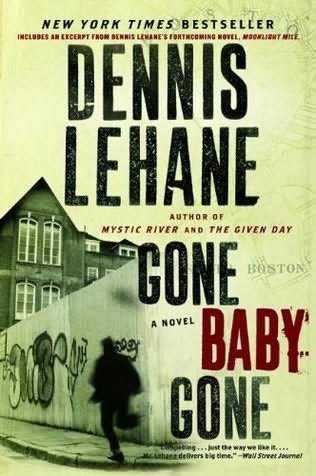
Tome: Gone Baby Gone

The bare skeleton of any good work of crime fiction is a case that requires solving.

What adds flesh and skin to this skeletal frame is the nature of the case, the myriad twists and turns it takes whikle snaking it's way to a jaw dropping finale.

But to give any tale of this genre some form, some unique musculature, that sets it apart as a specimen to be absorbed and admired, you need to layer it with atmosphere, taut, foreboding and menacing, inducing a sense of unease, a feeling of dread at what's about to unfold even as you tear through the pages to get there with all possible haste.

Dennis Lehane's fourth book featuring private investigators Patrick Kenzie and Angela Gennaro is a dark, violent look at the world of abducted children.

A world where "twenty three hundred children are reported missing every day, where "three hundred children disappear every year and never return"

A wold populated by sadistic paedophiles like Leon and Roberta Trett, who kidnap, handcuff, flog and sodomize children before killing them by slitting their throats.

In this world, mothers like Helene McReady, high school dropout, trailer park trash, recipient of three abortions, drug dealer and user, decides to have a child not because she's ready or capable enough to raise one, but to fill a void in an existence devoid of purpose, direction or meaning.

When Helene's 4 year old daughter, Amanda, goes missing, Kenzie and Gennaro are hired by Helene's brother Lionel and wife Beatrice and reluctantly accept the case.

Partnered with Poole and Broussard, 2 detectives from the CAC (Crimes Against Children) unit, Kenzie and Gennaro trawl the drug dens and dive bars of Boston in search of Amanda, an endeavour that proves increasingly complicated when Poole, Broussard and even Lionel may be harbouring hidden agendas of their own.

Even those familiar with Mystic River, Lehane's dark tale of misguided retribution and the shocking finale to his prison drama, Shutter Island, may well feel like showering after crawling through the subterranean underbelly of Lehane's Boston in this book.

Lehane's muscular prose is tender enough to masterfully evoke haunting melancholia as he describes the impact of a missing child on society:

" When a child disappears, the space she'd occupied is immediately filled with dozens of people. And those people-relatives, friends, police officers, reporters from both TV and print-create a lot of energy and noise, a sense of communal intensity, of fierce and shared dedication to a task.

But amid all that noise, nothing is louder than the silence of the missing child. It's a silence that's two and a half to three feet tall, and you feel it at your hip and hear it rising from the floorboards, shouting to you from corners and crevices and the emotionless face of a doll left on the floor by the bed"

Kenzie and Gennaro have a sexually charged chemistry that spark off the pages. Partners and lovers, they contemplate bringing a child into a world that is "cement cold and jaggedly sharp".

"The world was filled with monsters who'd once been babies, who'd started as zygotes in the womb,who emerged from woman in the only miracle the world has left, yet emerged angry or twisted or destined to be so"

It's this subtext, coupled with a colorful cast of supporting characters and a plot crackling with tension and whiplash twists, that make Gone Baby Gone a superlative effort in the genre.

Dark, moody and disturbingly current, Gone Baby Gone is a bitter brew, but if you're tired of diluted thrillers, a swig of this murky concoction is a must.

Sunday, August 03, 2008

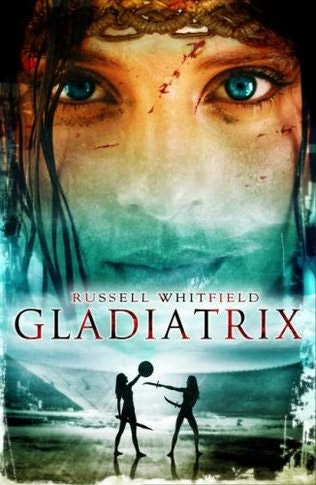
Tome: Gladiatrix

Russell Whitfield’s debut novel, Gladiatrix, is Chick Lit at its finest….if your idea of fine Chick Lit is a book teeming with finely toned, nubile females who are frequently nude and hack huge chunks of flesh out of one another, when they’re not enjoying carnal knowledge of the same.
Gladiatrix begins the way all good blood soaked medieval epics should; with a scene of brutal combat.
Spartan Lysandra strides alone, walking “through the darkness of the passageway towards the sun-filled amphitheatre”
“The roar of the crowd was a living thing as it assaulted her and she staggered beneath its violent intensity. Row upon row of the screaming mob surrounded her, the amphitheatre stuffed full, as if it were a massive god gorging upon base humanity. Her vision swam as she registered innumerable faces, twisted and distorted , their mouths wide open with howls of lust and anticipation. “
It’s in this charged atmosphere that Lysandra mets her opponent, a stocky Gaul, whom she dispatches with consummate ease in one of many thrilling scenes of gladiatorial combat Whitfield brings to life, with rapier sharp prose and a connoisseur’s eye for action.
In the 1st century AD, during the reign of the Emperor Domitian over the vast Roman Empire, the hunger and demand for gladiatorial combats was huge, and the Emperor’s own need for novelty in the arena had given rise to the Gladiatrix, female gladiators.It’s the sort of climate where Lucius Balbus, “supplier of novelty acts for the great and frequent games of the province- the only lanista (manager) who specialized in the training of women for gladiatorial combat”, thrives.
Into his ludus (gladiator school), comprised solely of female performers, Lysandra, sole survivor of a shipwreck is brought, to further hone her already formidable fighting skills.
But the melting pot of the ludus, where women of various tribes and races, each openly distrustful of the other are thrown together, soon bubble over with tension as Lysandra ‘s haughty and arrogant demeanor puts her on a collision course with Amazonian Sorina, Gladiatrix Prima of the ludus and the Nubian Nastasen, a powerful and sadistic trainer, who like most men who are intimidated by strong women, seeks to humiliate her sexually, as well as physically and psychologically.
Whitfield’s major achievement is in engendering empathy on the part of the reader for his heroine, given that Lysandra is an insufferable snob.
Of proud Spartan stock, and a temple priestess to boot, schooled and skilled in the brutal regiment of Spartan combat training, Lysandra’s derision for her fellow gladiatrices, of various Celtic, Germanic and Britannic tribes whom she lumps under the all purpose slur of “barbarians”, is matched only by her unwavering belief in her own lethal fighting prowess.
But her shattered pride at the realization that she is now someone’s chattel, to be honed and trained to provide entertainment for a baying mob, her gradual coming to terms with her plight coupled with some fairly monstrous obstacles put in her way by the scheming Sorina and the brutal Nastasen, slowly but surely endear her to the reader.
Beside, like the best heroes, Lysandra triumphs over her adversaries with faith, determination and fearsome martial skills.
Whitfield sets a crackling pace, zipping the plot along in between vividly described fight scenes, with sexual tension ( handsome trainer Catuvolcos wants to sheathe his “sword” in Lysandra’s Spartan “scabbard” but her self pleasuring sessions at night are stoked not by fantasies of the muscular Gaul, but of Eirianwen, the blonde and beautiful Gladiatrix Secunda ) and vicious rivalry ( Sorina’s growing hatred for Lysandra reaches fever pitch fury when Eirianwen, a member of her own tribe falls for the lanky Spartan).
There’s an interesting idea bubbling beneath the viscera of shattered bones, spilt guts, and dismembered limbs, that slaves though they may be, the women in the ludus still enjoy a far greater degree of freedom as trained fighters compared to their restrictive roles as daughters and wives, especially in the claustrophobically patriarchal Roman Society.
But such musings are hardly germane to the tone of the book which is first and foremost, an action epic that has you turning the pages so fast, you risk getting paper cuts on your fingers as the plot hurtles relentlessly towards the climactic showdown between Sorina and Lysandra .
And when it comes it’s a tour de force in armed combat description, the fight vividly unfolding in your imagination, as blades meet, strikes are countered and two skilled combatants pirouette in a dance of death.
It’s the sheer velocity of the narrative that help you overlook the linearity of a plot that holds little or no surprises, the broad strokes in which villains like Sorrina and Nastasen are sketched with nary a tinge of grey to give them depth and an ending which screams “sequel”. But given the thrill ride Whitfield takes you on, you’ll have no trouble signing on for “Gladiatrix 2”.
This book contains action aplenty, buckets of gore, copious amounts of female nudity and hefty helpings of Girl On Girl action ( both the vertical and horizontal variety).
What’s not to like?

Thursday, June 26, 2008

Dasavatharam


The lates magnum opus from India's most relentlessly envelope-pushing, genre-experimenting and still it's most prodigiously gifted Thespian is, boiled down to it's very essence, a long chase movie. Yes, that most generic of plot threads is strung along a 3 hour running time upon which Dr. Kamal Hasan's views, opinions, thoughts and musings on topics as diverse as Religion Vs. Atheism Vs. Science, caste conundrums, bio-warfare, Chaos Theory and The Butterfly Effect are judiciously pegged and plugged at various intervals. It's all giddily entertaining, thankfully, as the whole enterprise is shot through with a commercial sensibility firmly anchored by generous heapings of comedy and wittily punning dialogue (penned,like the story and screenplay, by Kamal himself).

As Baradway Rangan so eloquently articulated in his blog, the only problem with the whole Kamal approach to being layered beneath tons of prosthetics, something fans have been treated to for the better part of a decade, is that it inevitably gives rise to a question: Are you supposed to be reacting to the performance or the facial tics, mannerisms, goggle eyed glassed, scars and accent heavy patois it comes bundled in?

Such musings can be swept aside for Dasavatharam as for once, it's the Performances which take the honours, swooping down victoriously and snatching at least 4 out of 10 incarnations from the jaws of Derisive Disbelief on the part of the audience, for the most shocking thing about this high budget Hoopla that has as it's USP the assailing of 10 distinct characters on the part of it's Star, a first ever for Tamil cinema, is the Low Rent Make Up.

If Shivaji's colossal budget couldn't detract from it's low concept,you at least saw the moolah splashed on screen.

Dasavatharam is delightfully high concept (for a masala) wedded, unfortunately, to shoddy make up and schlocky effects.

Kamal as George Bush, CIA assassin Fletcher, a Brahmin Nanogenarian, Japanese Aikido Master and an 8 feet tall Muslim is a disaster where acceptance of how realistic these characters are supposed to look is used as a yardstick but his pitch perfect Yank accent, Brahmin enunciation and Japanese rolls of the "R"s help soothe the ears, tiding over what your eyes refuse to accept, which for the most part look as if white, wrinkly dough was slapped liberally about Kamal's face, hands and thighs.
But the 12th century priest Nambi and Dalit crusader Vincent Poovaraagan are master classes in bringing characters to life. Watch the former cut down a Shaivite King for daring to uproot a Vishnu idol in flawless Chola era Tamil and the latter castigate a sand smuggler in a tongue wrapped mellifluously around a pitch perfect Tirunelvelli accent(which gave this viewer 2 reasons to be thankful of the film's excellent English sub-titling) and you can see why Kamal's still miles ahead of his contemporaries in the acting stakes.
But the doozy is investigator Naidu, the most rib-tickling creation Kamal has birthed since Kameshwaran the Palghat cook mixed Tamil and Malayalam to serve heaping helpings of mirth way back in Michael,Madhana,Kama Rajan.
Mallika's Hot, Asin's Not, thanks to a script that has the latter go from spunky to squealy to outright annoying.
In the end, you need to ask yourself, in the Creative Void where most Tamil movies seem to languish these days, how many films dare even put ideas and concepts in a mass entertainer, and while the Boxing Day Tsunami of 2004 has been mentioned, crudely in comedic punchlines in most movies, and disgustingly inserted into a song lyric in one, Dasavatharam dares to culminate in its actual depiction. As the mile high waves cascade down and wash people and property away, it ties up plot threads, inter-connects others and bridges a 12th century plotline on religious discord to 21st century musings on Religion and Causality. That takes creativity and guts..in regretfully short supply elsewhere on the Tamil Cine Landscape.

Anbe Sivam's sermons on Socialism and Marxism married to the Road Movie a little too hard to swallow?

Aalavandhan's psychedelic psycho thriller a little too unpalatable?

Hey Ram's reactionary approach to Gandhi's pacifism wedded to art house sensibilities too glacially paced for your liking?

Well, a swig of Dasa may be just what the doctor ordered.

Sunday, May 25, 2008

Recently At The Cinemas...Indiana Jones And The Kingdom Of The Crystal Skull

19 years after riding off into the sunset (literally), The Man With the Whip and Fedora is back. Indiana Jones comes encumbered with the twin loadstones of meeting stratospheric expectations while taking great care not to shatter the hazy prisms of nostalgia through which most people still view, associate and cherish this billion dollar franchise with.
After all, taking an iconic character out of mothballs, dusting, cleaning and putting him back on display is a risky proposition. It's a fine balancing act between meeting expectations of what the audience will, naturally, want to re-live from previous installments, while upping the ante with even more inspired writing that takes the character further whilst not compromising on elements that made it resonate in the first place.
The key, then, is to stay true to the spirit of the character/franchise, and you can't go far off the rails.
After all, this is what made the recent resurrections of Rocky Balboa, John Rambo, and John McClane thumping successes in my book. Rocky was always about taking that One Shot life throws at you, Rambo was always heading towards the realisation that he was a machine bred for destruction and there lay his escape from a self imposed exile in Purgatory while McClane had long ago made peace with the fact that he'd always be That Man in the Wrong Place At the Wrong Time, speeding from one escalating action set piece to another.
With Indy, it was about capturing not so much the feel of an era but of an arcane form of celluloid entertainment, in this case, the completely alien (in this part of the world at least) 1930's matinee serials that always concluded with a cliffhanger, thereby guaranteeing returning audiences.
Along with Harrison Ford (effortlessly re-stepping into his iconic role) , Steven Spielberg also trots out the Indiana Jones goody bag of thrills: You have the opening gambit, always the best part of an Indy flick, set in Hangar 51, that mysterious conspiracy shrouded warehouse housing anything from alien bodies to radical technologies. The fact that this warehouse is a dead ringer for the one in which the Ark Of The Covenant was finally wheeled into at the end of Raiders, sets up the giddy nostalgia factor almost instantly. You just know you're going to catch a glimpse of that Famous Face-Melting Pandora's Box and Spielberg does not disappoint.
It's to this warehouse that an older but not necessarily wiser Indy and sidekick Mac (Beowulf's Ray Winstone, here in real life chunky form) are dragged to by the Russian KGB lead by icy cold Irina Spalko (the always phenomenal Cate Blanchett) to retrieve an alien corpse. Indy's subsequent escape, culminating in a nuclear blast is an action tour de force that sets the tone nicely. And from then on, it's back to the tried and truly tested formula that has propelled all 3 previous installments to the giddy heights of entertainment: The hunt for an ancient relic, this time the titular Crystal Skull, that must be found and returned to a long forgotten and buried remnant of an ancient civilization. There's banter, both banal and witty, between Indy and Mutt Williams ( Shia Le Beouf and the filmaker's ode to the Youth market), who accompanies Indy on his quest to both retrieve the skull and a lost Professor Oxley (John Hurt in Mad Hatter mode) who is the key to deciphering the Skull's true purpose, and between Indy and Mutt's mother, a returning Marion Ravenwood (Karen Allen) from Raiders Of The Lost Ark. No prizes for guessing Indy's connection to Mutt.
There are action set pieces a plenty, culminating in a convoluted chase through the Amazon which functions as the movie's signature Central Piece, like Indy's hijacking of a convoy was to Raiders, the mine cart chase to Temple Of Doom and the tank scene to Last Crusade.
In fact, much care has been taken to replicate elements from the previous flicks. A return of the most engaging of all Indy heroines, Le Bouf's character that functions as a grown up version of Short Round, Mac whose frequent duplicity calls to mind Indy's shiftiest heroine Elsa Schneider from Last Crusade, a spill down waterfalls that's reminiscent of Temple Of Doom, Jim Broadbent's Dean Charles Stanforth who subs nicely enough for the late Denholm Elliott's Marcus Brody while John Hurt's Professor Oxley replaces the older patriarchal figure obsessed with an ancient artifact a la Sean Connery's Henry Jones Sr in Last Crusade. Throw in the various assortment of creepy crawlies, trawls through dank and musty tunnels, a nod to Indy's abhorrence for snakes, a red line streaking through a map denoting Indy's travels from one place to another and a finale that is heavy on other worldy goings on (in this case extra terrestrial rather than Religious Lore) and you'd think Spielberg and Co had tossed in all the relevant ingredients into the stew.
So why then does the resultant broth still taste like something's missing?
Well, try the fact that the entire proceedings here have..well.. a rushed feel to the whole thing. I remember far greater interaction between Indy and Marion in Raiders, far more interplay even between Indy and the annoyingly whiny Willie Scott and resourceful side kick Short Round in Temple Of Doom, while it was The Last Crusade's key strength;Indy's difficult relationship with his father, tempestuous liason with Elsa and familiar camaraderie with Marcus and Sallah.
Crystal Skull seems to be in a rush to get from action set piece to bigger action set piece to Revelatory Climax and Effects Laden Finale.
And since Raiders, every Indy movie has seen a gradual deterioration in it's Chief Villain. We've gone from the reptilian menace of Ronald Lacey's Major Toht , to Amrish Puri's campy but still effective Mola Ram, down to an ineffectual Julian Glover's Walter Donovan and it pretty much reaches it's nadir in Blanchett's Irina Spalko. Blanchett is simply incapable of a bad performance, but by refusing to make Spalko a power mad agent of destruction but rather the ultimate scientist who wants to possess the Ultimate Knowldege, she blunts the edge off the character, robbing it of some much needed menace.
Ironically, by upping the stakes in the thrills department, Indy 4 sacrifices it's core appeal: That amidst it's breathless pace, Indy 1-3 still made time to have you know it's characters as they shouted, screamed,bantered and connected atop rope bridges, mine carts, caves, caverns and deserts.
Crystal Skull updates the Pre-World War 2 anxiety of the previous installments with Post War Paranoia of 1957, replete with Red Menace propaganda, rock and roll, greasy hairs and leather jackets, but the period doesn't sit well with Henry Jones Jr. In fact, given the fact that he's actually referred to by that name more often than his adopted moniker (something he would not have tolerated 19 years ago) , in addition to Gramps and Old Man by Mutt not to mention an ending that suggests..shock! horror!.. the impending Domestication Of Dr.Jones, I am moved to wonder..is this Spielberg and Lucas' sly nod to Indy being gradually put out to pasture to see his Golden Years out in tranquility?
If so, I for one, would have been content to re watch episodes 1 to 3, contentedly basking in the glow of Indy at his prime.
A consistent Trilogy is now an uneven Quadrilogy.
And look no further than Crystal Skull for the mismatch.

Wednesday, May 21, 2008

Recently At The Cinemas...Iron Man


Plot: Tony Stark is the complete playboy who also happens to be an engineering genius. While in Afghanistan demonstrating a new missile he's captured and wounded. His captors want him to assemble a missile for them but instead he creates an armored suit and a means to prevent his death from the shrapnel left in his chest by the attack. He uses the armored suit to escape. Back in the U.S. he announces his company will cease making weapons and he begins work on an updated armored suit only to find that Obadiah Stane, his second in command at Stark industries has been selling Stark weapons to the insurgents. He uses his new suit to return to Afghanistan to destroy the arms and then to stop Shane from misusing his research.-Courtesy of IMDB

Iron Man opens with Robert Downey Jr. cradling a whisky glass. It works both as a nod to the film's origins (Tony Stark has a drinking problem in the comics) and it's star. Iron Man is not the first superhero flick to feature a billionaire playboy using his prodigious mind not to mention enviable fiscal resources to fight crime and right wrongs, but it can lay proud claim to projecting one we can readily connect to.

This is in no way a reflection on Christian Bale's essaying of a similar character in Batman Begins, but more to do with a star's ability to imprint his real life in varying shades onto a screen alter ego.

Christian Bale can do intense in his sleep, but he's not the one with a once boyishly handsome visage now streaked with character lines.

Robert Downey Jr. nails the part simply on the basis of his having lived the life of Stark to a certain degree and his face mirrors that of a life lived larger than most and often on the precipice of free fall. It's almost as though his arrest for drink and drug related offences practically branded the role onto him, searing him with Stark's demons, cauterizing Downey into Stark.

It's what makes Iron Man such delicious viewing, even more than it's skewering of Right Wing policies on Weapons Manufacture.

Yes, we know that Arms Maker Stark undergoes an epiphany of sorts when he is captured to make his own weapons for the very people his "products" are supposed to keep at bay, and knowledge of his company's dubious "double-dipping" to arm both their Government and the "Enemy" with the same set of "toys" only strenghtens his resolve to make and keep the "coolest" one for himself.

And the analogy of a heartless profiteer whose gadget-packed suit of armour is essentially scrap metal without a glowing "ticker" to keep him operational, is anything but subtle.

That the CGI on display (much of it cool) aid rather than overwhelm the story and the fact that Gwyneth Paltrow, for once, actually comes across as endearing with her subtle tap-dance of repressed feelings around her charismatic employer, is mere icing on the cake.

The cake itself, and a rich,creamy and luscious one it is, is Downey Jr, nailing the part with consummate ease, whether he's flooring you with his rat-tat-tat one-liners or convincingly etching the potrayal of a flawed man starting on the road to redemption.

Whether this applies to the actor or the character is immaterial. You want to cheer both of them on.

This Tin Man has Heart.

Tuesday, May 20, 2008

Recently At The Cinemas....The Forbidden Kingdom

In Forbidden Kingdom, American teenager Jason (Michael Angarano), who is obsessed with Hong Kong cinema and kungfu classics, finds an antique Chinese staff in a pawn shop: the legendary stick weapon of the Chinese sage and warrior, the Monkey King (Jet Li). With the lost relic in hand, Jason unexpectedly finds himself transported back to ancient China.There, he meets the drunken kungfu master, Lu Yan (Jackie Chan); an enigmatic and skillful Silent Monk (Jet Li); and a vengeance-bent kungfu beauty, Golden Sparrow (Crystal Liu Yi Fei), who lead him on his quest to return the staff to its rightful owner, the Monkey King - imprisoned in stone by the evil Jade Warlord (Collin Chou) for five hundred years. Along the way, while attempting to outmaneuver scores of Jade Warriors, Cult Killers and the deadly White Hair Demoness, Ni Chang (Li Bing Bing), Jason learns about honor, loyalty and friendship, and the true meaning of kungfu, and thus frees himself. ---Synopsis courtesy of IMDB
The Forbidden Kingdom, the much awaited, hyped and trumpeted team up between 2 Asian Screen Icons of Martial Arts Mayhem, Jackie Chan and Jet Li, works exactly where War, another awaited (perhaps not as eagerly) team up between Jason "Transporter" Statham and Jet Li did not. And it works for one simple reason: It delivers exactly what you expect from such a team up: Wall to Wall chop socky, once again via the exquisite choreography of ace fight coordinator Yuen Wo Ping. And that is all one really needs from a flick like this. Fights, fights and more fights.

Balls to the wall scrapes, fisticuffs, wire fu and white knuckle stunts, smoothed over by acrobatic agility. Give me that and you've sold me.

The story? Ah...that's where you'd best pay no mind. It's one part Karate Kid (geeky white kid bullied and beaten up, who then gets a crash course in Kung Fu, courtesy of not one but 2 Mr.Miyagis) and one part Shaolin Kung Fu Flick( if you can picture such flicks where characters not only talk English, but spew American Slang like "Taking a Dump" ) , with liberal poaching of elements from Chinese Kung Fu epics of yore, like the Bride With White Hair, evil warlords and Celestial Gods on top of Chan and Li's Drunken Master and Stoic Monk characters while fights staged in tea houses and bamboo forests are obviously more recent cribbings from newer incarnations like Ang Lee's Crouching Tiger, Hidden Dragon and Zhang Yimou's wu xia flicks like Hero, House Of Flying Daggers and Curse Of The Golden Flower.

Such blatant unoriginality can be easily forgiven, especially when Kingdom even delivers that other thing you expect in a Jet/Jackie team up: One scene where the martial maestros go at it. The Jet-Jackie fight, unlike the Jason/Jet one in War, is not over in the blink of an eye and goes on just long enough to be savoured, a comment that can be eaily applied to the whole movie.

And in this age of bloated blockbusters..it is a blessing indeed.

Tuesday, March 25, 2008

Love In The Time Of Cholera


Verbose, overtly descriptive with meagre smatterings of dialogue, irritating flashes forwards and backwards through time, an annoying amount of foreshadowing, inhumanly long paragraphs leading to chapters of unholy length and what is surely the death blow for a love story: Unlikeable Romantic Leads (She's Cold, He's Creepy)-By all accounts, this reader should have hated Love In The Time Of Cholera.

But surely, slowly and insidiously, Marquez worked his magic, reeling me in when I had no idea of being hooked, an Omniscient narrator not so much creating a world, but convincing me that one exists and inviting me to partake of it's peoples' lives and loves as they live through a change of century, civil wars, modernisation and the titular epidemic.

Like Atonement, Cholera is deceptively sly, convincing you that it's a love story, while cunningly suggesting at times, that it's anything but.

Florentino Ariza's unrequited love for Fermina Daza (has there ever been a more brutal rejection of a man's love by a woman in fiction?) , like the best Love Stories, spans decades, but it's apparently no deterrant to various, transitionary liasons with lonely and widowed women (622 in all) culminating in a tragic and frankly, despicable Humbert- like seduction of a young Lolita left in his charge.

But in spite of it, you are carried feverishly along the "will they or won't they" Love Story Suspense Arc , hoping for a joyful resolution to Florentino's 51 year wait.

Marquez masterfully chronicles love in all it's blissfull and painful guises; feverish adolescent passion, the treacherous minefield of tangled and conflicted emotions in a long marriage, fleeting happiness snatched from all too brief affairs not to mention erotic and romantic fulfillment in old age.

If Atonement was metafiction couched in the language of a Doomed Romance, Cholera is a dense meditation on Love and Relationships ensconced comfortably, even deceptively, in the tropes of an Epic Romance.

Sensual, Tragic, Funny, Surreal and most of all, Hearbreakingly Romantic, "El amor en los tiempos del cólera'' is terrific.

4 stars.

Monday, March 24, 2008

The Last Detective

My introduction to Robert Crais was via Hostage, his first stand-alone book after 8 novels featuring wise-cracking, Hawaian shirt loving PI Elvis Cole and tough and taciturn partner Joe Pike.

Hostage was a crackling read, introducing some pretty nifty twists to the whole hostage/negotiator scenario. It spurred me to pick up LA Requiem, 8th in the Cole/Pike series, but no handicap as they're all pretty stand-alone, barring a few developments on its' heroes' personal front that stretches across a few books.

As Crais himself mentiones in his web-site, start with his stand alone's and discover Cole/Pike via Requiem as it's the book that elevated a series of wise-cracking PI capers to serious Crime Thriller category, ratcheting Crais up to breathe that rarefied air in the stratosphere where heavyweight practicioner's of the craft like Michael Connelly ply their trade.

Like Connelly, Crais's novels are set in LA, and feature a complex hero navigating between plots creeping with tension and increasingly precarious relationships.

When The Last Detective opens, you learn events in LA Requiem have scarred both our heroes;

Tough as nails Joe Pike now nurses a bad arm, a result of being shot in the back, twice. "The bullets shattered his shoulder blade, spraying bone fragments like shrapnel through his left lung and the surrounding muscles and nerve".

And hunting an Alaskan Brown Bear (the largest predator on land) in the wilderness, Joe feels something he's rarely felt: fear

Elvis Cole is navigating an emotional minefield as his relationship with ex-Baton Rouge lawyer Lucy Chenier is becoming increasingly tenuous as she struggles to accept the fact that both Cole and Pike have a tendency to draw violence to them. She wants normal and the self-confessed World's Greatest Detective doesn't do normal.

And things are about to get worse....

Baby-sitting Lucy's 10-year old son Ben while she's away covering a trial, Cole is rail-roaded into every parent's worst nightmare when Ben is kidnapped right under his nose.

Enter the police, with chain smoking Carol Starkey ( a returning character from Crais' stand-alone Demolition Angel) and sex-obsessed criminalist John Chen (from Requiem) not to mention ever reliable and lethally effective Joe Pike to help and Lucy's obnoxious ex-husband and Ben's father, Richard to hinder and obstruct.

Tension mounts as the kidnappers are found to be linked to Cole's past as an Army Ranger in the Vietnam war, who allege Ben's kidnapping is retribution for atrocities Cole committed during his Tour of Duty...

Dodging the police who urge him to stay off the case, incurring Lucy's mounting anger when he doesn't while staying one step ahead of Richard, his oily lawyer Leland Myers and a duo of hired goons, Elvis and Joe race against time to locate Ben.

Multiple viewpoints (narratives switch from Cole's to Pike's, to Ben's and even the kidnappers' and plus an Omniscient overview in flashbacks to Cole's childhood and Vietnam Tour ) keep the plot hurtling along at breakneck pace.

If there's a weakness, it's that the twist in the plot can be figured out early and there's little or no complexity to the bad guys, although the trio of kidnappers, a scarred African and 2 ex-mercenaries are suitably menacing to up the chill factor (especially in a flashback account detailing their atrocities in Sierra Leone).

And my own Pet Peeve is that Crais, like Connelly and so many other writers in this genre, keep saddling their essentially lone wolf heroes with love interests only to have the relationship go belly up a few books later. Why do these women attach themselves to men knowing full well what they do, only to turn around and castigate them later for it?

But Crais redeems The Last Detective with a white knuckle, sweaty palmed, adrenaline thumping showdown that's guaranteed to notch up heartbeats.

A book to be gulped down in one sitting. It's that addictive.

The Last Detective is certainly not my last Cole/Pike book.

Starting The Forgotten Man, the next Elvis Cole mystery.

Keep you posted...

Billa (2007)


So, is this what it's come down to? A disenchantment so severe at the state of Tamil films that you snatch at it's miniscule positives with the savagery of a parched soul offered a jug of cool water.

I am trying my level best to write about how cool Billa is.

Now, there are differing levels of cool, of course. I'm not talking about the stratospheric type of cool that's achieved through the use of inventive, pop culture laced dialogue and shifting timelines a la Tarantino in Pulp Fiction , or ground breaking visual effects that has the most jaded action fan dropping his jaw in The Matrix or 300.

No, this is cool that is scaled way,way, waaaaaaay down the "hot" index, and contextualised within the colossally rigid tropes of a Tamil movie. This is after all, a genre that spawns endless cookie cutter melodramas that are often loud, obnoxious, misogynistic, simplistic and hypocritically Puritan.

So, to find a film that actually boasts some semblance of style, that actually takes the trouble to coat it's frames with a patina of glossy sheen, dress up it's actors in chic garbs, and have them strut like seasoned denizens of the catwalk, is a revelation.

I mean, the above is by now Standard Issue in Bollywood. But Kollywood??? An industry that still routinely pairs Geriatrics with girls fresh off the cusp of adolescence, passes off Dhanush as a hero and most criminally, still allows T.Rajendar to make movies??

I should be talking about how Billa(2007) successfully updates the old Rajini original( original in the loosest sense, as it was a remake of an Amitabh starrer in Hindi called Don, itself updated recently by Farhan Akthar with Shah Rukh Khan) for a modern audience, amping up the action and suspense while keeping the core storyline of a simple man forced to impersonate a ruthless criminal, intact.

I can't...because the film's a train wreck. And in sifting through the detritus, my meager haul of salvageable material are items that should remain in the background, visible to the eye but never overshadowing what should be the movie's main thrust: it's plot, action and suspense...in that order.

Instead, I find myself, for the sake of not writing a review that completely rubbishes the movie, talking about it's slick cinematography, drenching it's scenes in flashy, strobing monochrome images while trying my best (and failing) to ignore the fact that it's in the service of repetitive shots of people strutting towards or away from one another.

I'd like to tell you, that never before, have the sounds of cocking firearms and gunshots sounded so realistically in a Tamil movie, only to be negated by insipidly staged and amateurishly executed action scenes.

I'd like to tell you, that Ajith has never looked this cool before, clothed in designer couture and shades, but also, that despite it, he remains one of the most blandest actors in Tamil films today. See him deliver a line like "I'm back" with all the enthusiasm of a patient about to undergo triple Root Canals at the dentists', and explain to me how this charisma free, bland and weak voiced "actor" (he's the Tamil Kevin Costner) commands a formidable fan club and is dubbed, among other things, the "Ultimate Star".

I'd like to tell you that Nayanthara, fat and irritating in Ghajini, is now trim and svelte and pretty easy on the eye in a bikini, but that she unfortunately has to share screen time with a beached whale called Namitha.

Billa's biggest causalty is the complete dilution of the original's central concept of an ordinary streetwise man thrust into the high gloss and lethally treacherous world of international crime.

As cheesy as the original was (the multiple somersaults in the climax as each character makes a grab for an incriminating videotape is a sure cure for the Humour Challenged), Rajini's street performer, with betel juice dribbling down his chin, convinced you that even with swanky suits, gangster molls and hired underlings at his beck as Billa's double, nothing beat popping a paan and dancing a jig with his erstwhile cronies.

The current flick deals with the second Ajith's introduction and subsequent induction into a Police Officer's plan to impersonate Billa so perfunctorily you wonder why they even bothered with a song scene that was so skillfully inserted in the original (on the run from Billa's gang who discovers he's not the real deal, Rajini encounters his former friends, muses nostalgically on the simple life he once had, and then breaks into a song).

There's simply no context for the song in the remake. There is no delineation between the 2 roles (further damning evidence of Ajith's severely limited range), nothing to tell you that this is a streetwise pickpocket who'd rather dance in Batu Caves than throw lavish parties at his mansion.

There is an admirable economy in dialogue, a pleasant change from the often verbose fare that assails your ear in most Tamil flicks, and a courageous avoidance of anything even remotely resembling a romance between Nayanthara and Ajith, but a choppy approach to the screenplay makes it's relatively short (for a Tamil movie) running time of 2 hours seem at least 30 minutes longer. It tries to emulate the "Plot Twist" gimmick of the "Don" remake without daring to go the whole hog. So you're left with a weird hybrid that wants to stay true to the original, while jacking up the excitement via some modern plot twists, and failing miserably at both.

As an avid lover of movies (there's the word "flicks" after all in my blog title), I do tell myself every now and then not to limit my cine diet to Hollywood fare. And so I add variety to my viewing palate with a smattering of Chinese there, a grain of Korean here with side helpings of French, Spanish and Italian. To spice up the whole mixture, I should be heaping on generous portions of South Indian fare.

But on the basis of this latest foray into Tamil movies, I'll stick to the bland stuff. It's easier on the stomach....